Project
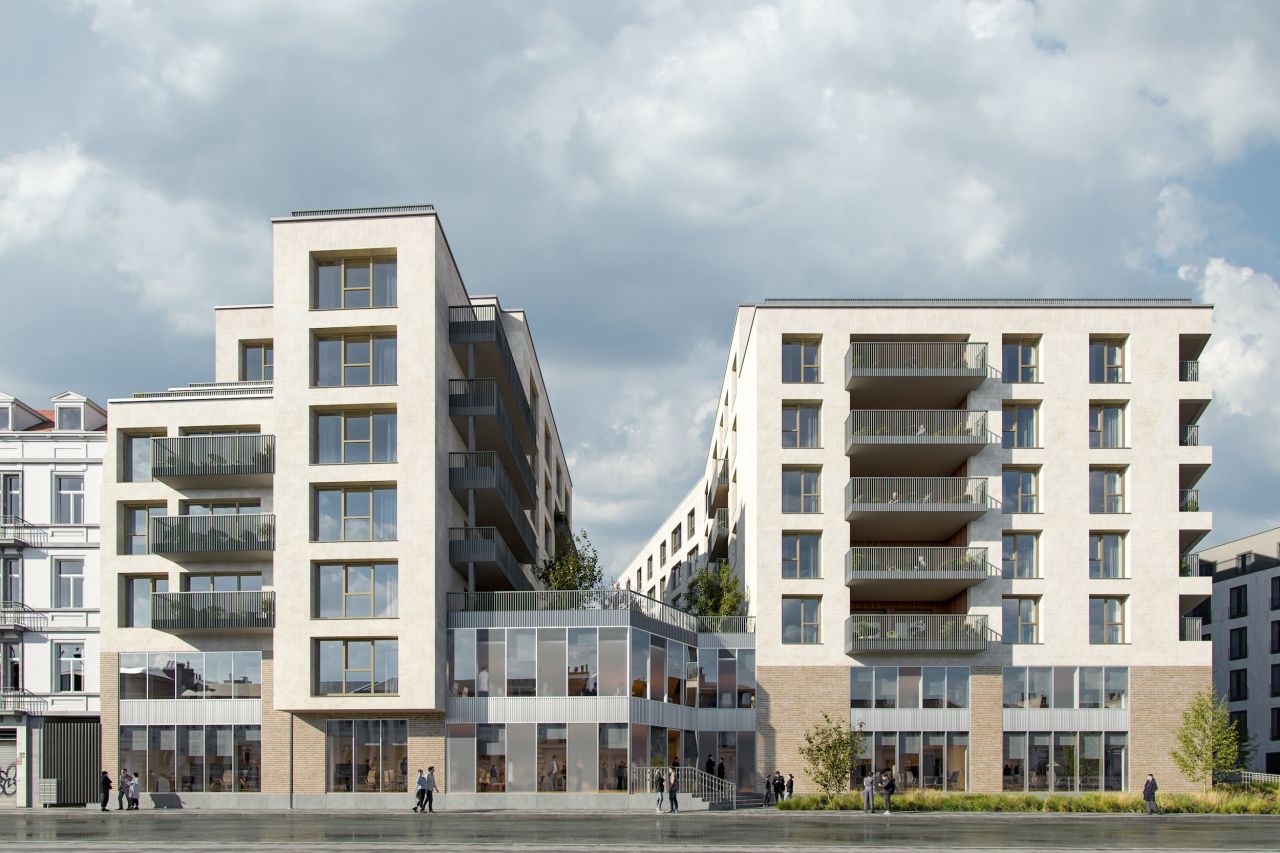
Chartreux is a 14,000 m² housing renovation in Brussels developed within a delivery model combining architectural coordination and BIM management. From the outset, the project was approached not only as a design problem but also as a question of how regulatory information could be produced reliably from the project itself.
Architectural Idea
Permits are often treated as bureaucratic documents appended to a project. Here, the objective was different: to treat regulatory data as spatial information extracted directly from the architecture, so the permit logic stayed tied to the model instead of drifting into parallel spreadsheets.
System Challenge
The project combined phased construction constraints, demanding permit documentation, and repeated design revisions. Manual area calculations would have created inconsistencies across submissions, turning every change into a coordination risk and slowing production at exactly the wrong moments.
Method
To address that, the BIM environment was structured around clear model standards and automated extraction workflows. Custom Revit scripts generated permit surfaces directly from the model, eliminating manual calculations and reducing the risk of inconsistencies across deliverables.
Impact
Permit surface extraction time fell from approximately two hours to eight minutes. More importantly, regulatory production shifted from a fragile manual process to a robust workflow that improved reliability, reduced coordination noise, and established a reproducible method later reused across other office projects.
Why It Matters
Chartreux shows how algorithmic thinking can reinforce architectural practice. The value was not automation for its own sake, but the creation of a system where regulation, geometry, and production logic stayed aligned as the project evolved.