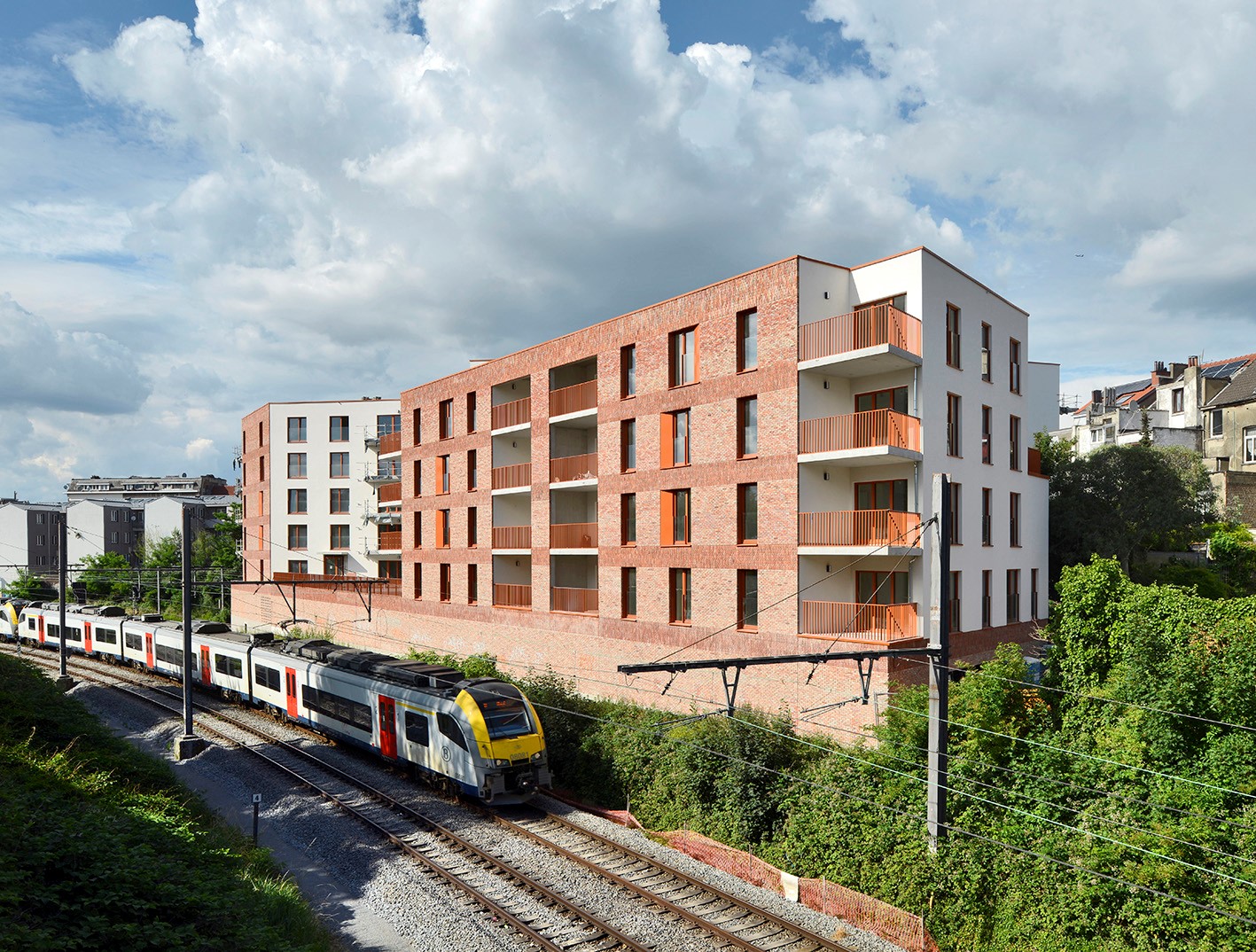
Project
Vandergoten is an 8,700 m² housing renovation in Brussels where material reuse became a central design parameter rather than a late-stage sustainability addition. The project explored how reclaimed bricks could be integrated into both the architectural concept and the technical delivery process from the earliest phases.
Architectural Idea
Material reuse is only meaningful when it becomes a design driver, not a symbolic gesture. At Vandergoten, reclaimed brick was treated as an active architectural variable capable of shaping decisions, rather than as an environmental add-on introduced after the project logic was already fixed.
System Challenge
Reclaimed materials introduce uncertainty at multiple levels: available quantities, logistics, constructability, and coordination with structural and technical systems. Without a measurable framework, reuse risks remaining aspirational until site realities force compromises.
Method
To ensure feasibility, the reuse strategy was embedded directly within the BIM framework from the earliest design phases. Model structures, quantity extraction systems, coordination checkpoints, structured schedules, and controlled modeling logic were all organized to test the viability of reclaimed materials throughout project development.
Impact
By treating reuse as a measurable and coordinated design variable, the project transformed an often symbolic sustainability intention into an operational construction strategy. Reuse became testable before construction, reducing technical uncertainty and limiting financial risk during execution.
Why It Matters
Vandergoten positions architecture as a material intelligence system. The real value was not only proving that reclaimed materials could be used, but designing the information structure that made circular construction buildable.